
From Prototype to Production: Scaling Medical Device Interconnect Systems for Commercial Success
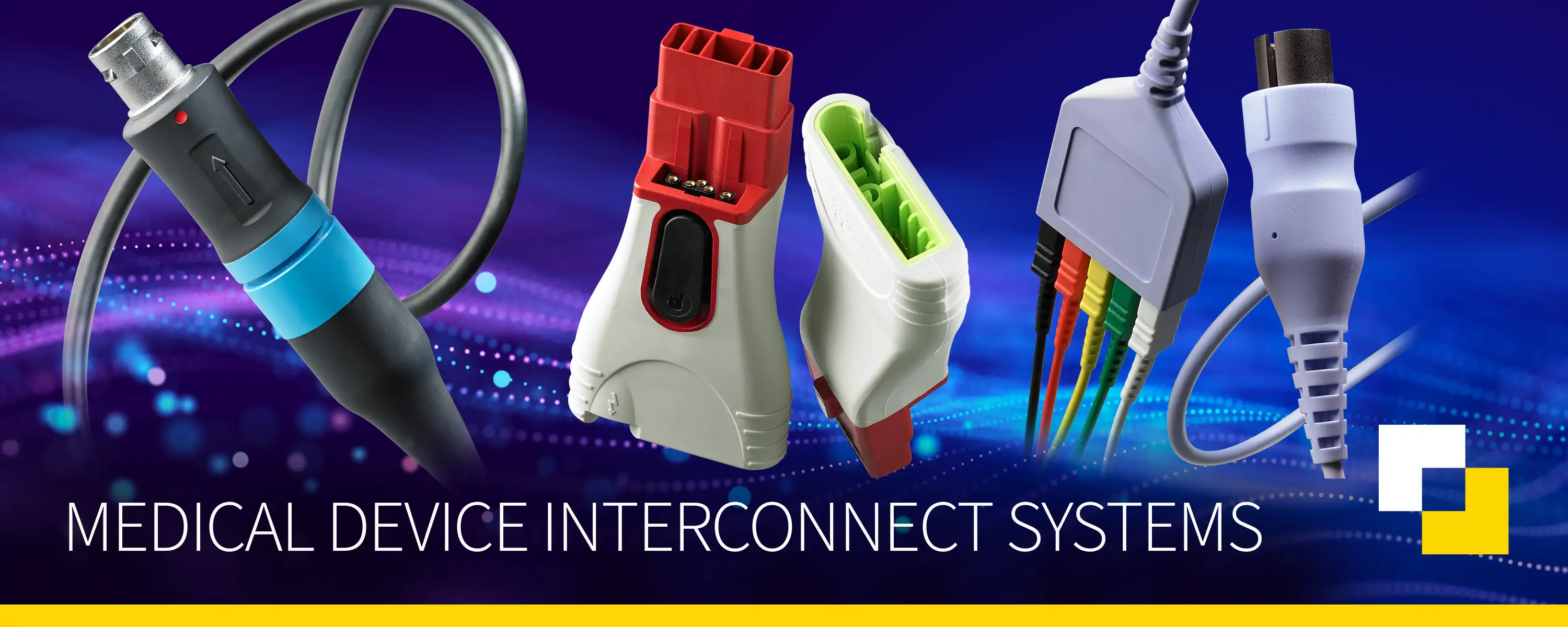
Medical device innovation depends on reliable connectivity. As technologies become smaller, smarter, and more complex, medical device interconnect systems play an increasingly critical role in powering device performance, enabling data transmission, and supporting patient safety.
However, developing an effective interconnect solution requires more than designing cables and connectors. OEMs must navigate prototyping, verification and validation, regulatory requirements, supply chain complexity, and manufacturing scalability to successfully move from concept to commercialization.
By integrating interconnect engineering, validation expertise, and manufacturing capabilities early in the development process, medical device companies can reduce risk, accelerate time-to-market, and improve long-term product performance. This article explores the key considerations involved in scaling medical device interconnect systems from prototype to production and how strategic manufacturing partnerships can help support successful commercialization.
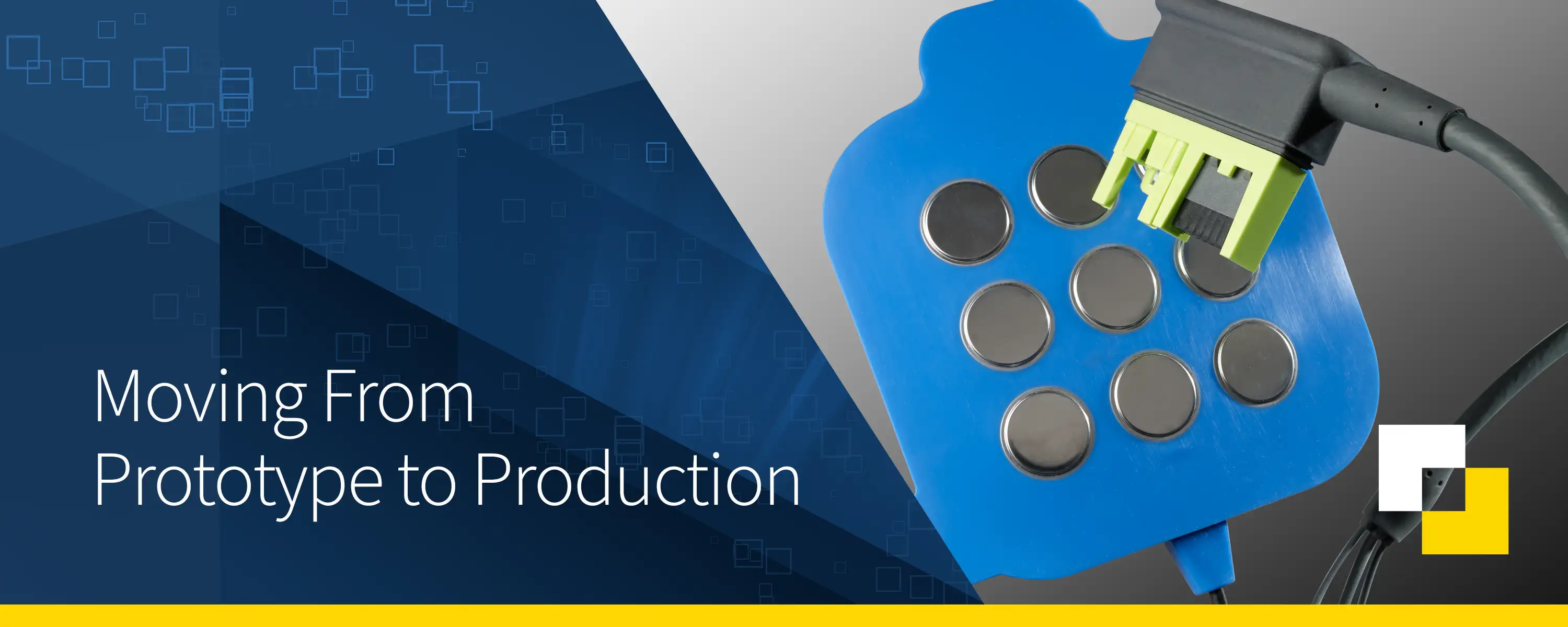
Rapid Prototyping Accelerates Innovation
Rapid prototyping strategies allow OEMs to validate interconnect designs earlier, reduce development risk, and improve overall project timelines.
Advanced prototyping capabilities support:
- Faster design iterations
- Early feasibility testing
- Functional evaluations
- Design optimization
- Reduced development risk
Paragon Medical leverages additive manufacturing technologies, advanced engineering resources, and prototype development expertise to help customers refine interconnect architectures before full-scale production begins.
Verification and Validation Remain Essential
Medical device validation testing ensures interconnect systems perform safely and consistently under real-world operating conditions.
Verification and validation activities may include:
- Functional testing
- Fatigue and cycle testing
- Electrical performance testing
- Signal integrity analysis
- Environmental testing
- Sterilization validation
- Regulatory compliance support
FDA-registered and ISO-certified manufacturing environments help OEMs maintain quality standards throughout development, validation, and commercialization.
Planning for Scalable Medical Device Production Early
Scalable medical device production begins during the earliest design stages.
When teams fail to consider scalability early, they often face:
- Production delays
- Supply chain challenges
- Costly redesigns
- Manufacturing bottlenecks
- Extended validation timelines
OEMs that integrate manufacturing expertise into development workflows improve commercialization readiness while reducing risk during scale-up.
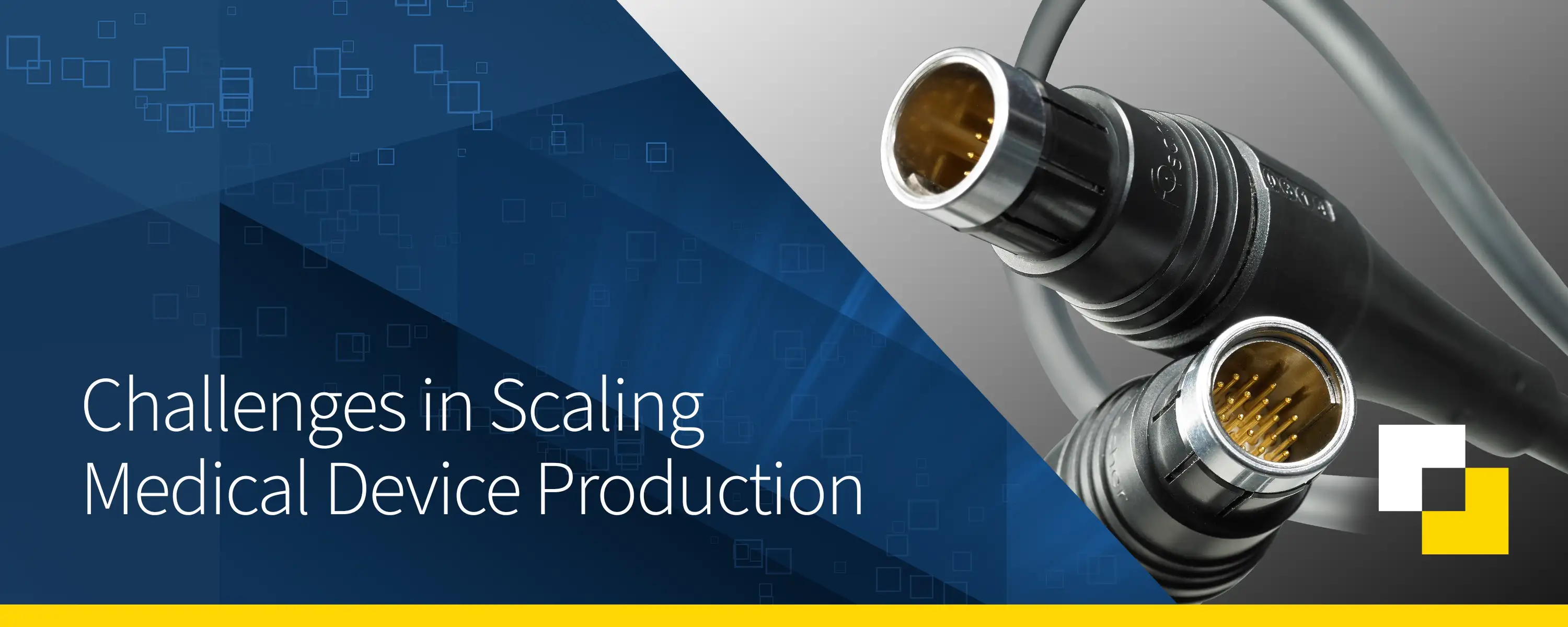
Maintaining Consistent Quality Across Volumes
Tight tolerances become increasingly difficult to maintain as production volumes increase.
Advanced automation, precision inspection systems, controlled manufacturing environments, and robust quality management systems help manufacturers maintain repeatable quality while supporting scale.
Managing Complex Supply Chains
Medical device production depends on stable supply chains, reliable sourcing strategies, and strong supplier management processes.
For many OEMs, interconnect systems often involve multiple suppliers across connectors, cable assemblies, molded components, and electronic subsystems. Managing these relationships can increase complexity, extend timelines, and create quality risks.
Integrated manufacturing capabilities help reduce supply chain complexity while improving coordination across development and production activities.
Regulatory Compliance and Documentation Requirements
Medical device manufacturers must maintain strict documentation, traceability, and validation standards throughout the product lifecycle.
Compliance requirements continue evolving across global markets, making experienced manufacturing partnerships increasingly valuable when navigating commercialization challenges.
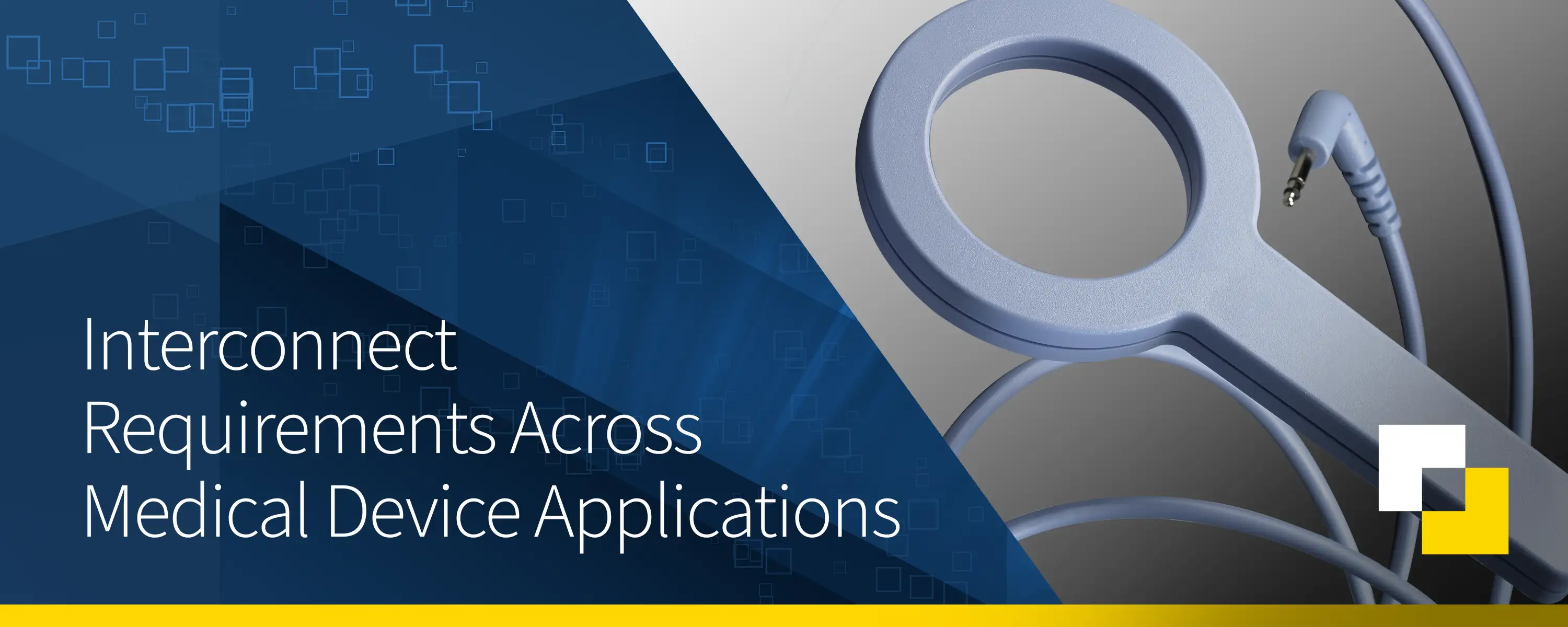
Different medical technologies place unique demands on interconnect system performance.
Surgical Robotics
Robotic systems require high-flex cable assemblies, compact connector designs, and exceptional signal integrity to support precise motion control and real-time data transmission.
As robotic platforms become smaller and more sophisticated, miniaturized high-density interconnect systems become increasingly important for maintaining performance within limited device footprints.
Implantable and Neuromodulation Devices
Implantable technologies require biocompatible materials, long-term reliability, durable electrical connections, and protection against environmental exposure throughout extended device lifecycles.
Reliability and performance are particularly critical because device failures may require invasive revision procedures.
Diagnostic and Imaging Systems
Diagnostic equipment depends on signal fidelity, impedance control, EMI shielding, and reliable connectivity to ensure accurate data acquisition and consistent system performance.
Advanced imaging technologies often require high-frequency signal transmission where even minor signal degradation can impact clinical outcomes.
Drug Delivery Devices
Wearable and portable drug delivery systems frequently require durable cable assemblies, sterilization-resistant materials, ergonomic overmolded components, and reliable electrical performance in demanding use environments.
Integrated interconnect systems can also help reduce device size while improving usability and durability.
By tailoring interconnect architectures to application-specific requirements, OEMs can improve reliability, manufacturability, and long-term product performance.
The Role of Advanced Manufacturing Technologies
Automation Improves Efficiency and Repeatability
Automation reduces variability while improving production throughput, consistency, and quality control.
In advanced medical device interconnect manufacturing, automated assembly systems support precision processes while enabling scalable production without sacrificing quality.
Additive Manufacturing Supports Faster Development
Additive manufacturing technologies support:
- Rapid prototyping
- Faster iteration cycles
- Complex geometries
- Custom component development
- Accelerated design validation
These capabilities allow OEMs to shorten development cycles while improving design flexibility.
Cleanroom Manufacturing Supports Medical Device Quality
Cleanroom assembly and controlled manufacturing environments help protect sensitive medical device components from contamination.
Medical-grade assembly, packaging, and validation support help ensure product quality throughout production and commercialization.
Why Strategic Manufacturing Partnerships Matter
End-to-End Collaboration Reduces Risk
OEMs increasingly seek partners capable of delivering complete interconnect systems rather than managing multiple component suppliers.
By consolidating custom cable assemblies, high-density connectors, silicone overmolding, embedded electronics, PCB integration, validation support, and manufacturing within a single development partner, organizations can reduce supplier complexity, streamline validation activities, and improve development efficiency.
Integrated collaboration across:
- Design
- Engineering
- Validation
- Manufacturing
- Assembly
- Commercialization
helps reduce risk while supporting successful product launches.
Faster Time-to-Market
Integrated engineering and manufacturing teams streamline communication, improve decision-making, and accelerate commercialization timelines.
When interconnect systems are engineered with manufacturability and scalability in mind from the outset, OEMs can avoid costly redesigns and move more efficiently from prototype to production.
Flexibility to Support Innovation
Medical device companies need manufacturing partners capable of scaling production while maintaining quality, compliance, and performance standards.
Paragon Medical provides:
- System-level interconnect engineering expertise
- Custom medical cable assemblies
- High-density medical connector solutions
- Advanced silicone overmolding technologies
- Smart cable assemblies and PCB integration capabilities
- Medical device contract manufacturing support
- Global manufacturing resources
- Integrated commercialization services
Our teams help OEMs engineer reliable medical device interconnect systems designed for both clinical performance and scalable production success.
Partner With Paragon Medical
Reliable medical device interconnect systems play a critical role in patient safety, device functionality, and commercialization success.
As medical technologies continue advancing, OEMs increasingly require integrated interconnect solutions that combine custom cable assemblies, high-density connectors, embedded electronics, silicone overmolding, and scalable manufacturing capabilities into a single validated system.
By consolidating multiple interconnect elements into a unified solution, organizations can reduce supplier complexity, improve validation efficiency, lower total cost of ownership, and accelerate time-to-market.
Paragon Medical partners with medical device innovators to engineer, validate, and manufacture fully integrated interconnect systems that support reliable device performance, regulatory compliance, and scalable commercialization.
Contact our team today to learn how we can help optimize your next medical device interconnect system.
Frequently Asked Questions
What is a medical device interconnect system?
A medical device interconnect system consists of cables, connectors, electromechanical assemblies, and electronic components that enable power delivery, data transmission, and reliable device operation.
Why is rapid prototyping important for medical device development?
Rapid prototyping allows OEMs to evaluate designs earlier, identify potential issues, accelerate design iterations, and reduce development risk before production begins.
How can OEMs improve scalability during medical device development?
OEMs can improve scalability by incorporating manufacturing expertise early, designing for manufacturability, and considering production requirements during the initial development stages.
What challenges arise when scaling medical device production?
Common challenges include maintaining consistent quality, managing supply chain complexity, meeting regulatory requirements, and supporting validation activities at higher production volumes.
Why are integrated interconnect solutions beneficial?
Integrated interconnect solutions reduce supplier complexity, streamline validation efforts, improve reliability, and help accelerate time-to-market by combining multiple components into a single engineered system.