
From Signal to Solution: Designing the Next Generation of Electrophysiology Devices

What Is Electrophysiology – and Why it Matters
Electrophysiology (EP) is the study and clinical use of electrical activity in biological tissue. In cardiac care, EP technologies help clinicians identify abnormal heart rhythms, map electrical pathways, and deliver therapy to targeted tissue.
Common EP technologies include diagnostic mapping catheters, ablation catheters and systems, implantable monitoring devices, and pacing technologies. These products must perform reliably in a demanding environment where signals can be weak, movement is constant, and space is limited.
Why Electrophysiology Demands Engineering Excellence
Electrophysiology (EP) is at the heart of innovation in cardiac care, especially for diagnosing and treating arrhythmias like atrial fibrillation (AFib). As the field evolves, device designers face increasing demands for miniaturization, precision, and reliability. Recent advances such as pulsed field ablation (PFA) and dual-chamber leadless pacemakers are reshaping the landscape, making engineering excellence more critical than ever.
An effective electrophysiology (EP) device must detect, transmit, and interpret very small electrical signals accurately while operating safely in or near the heart. Successful designs balance compact form factors, high-density connectivity, signal integrity, biocompatible materials, reliable manufacturing, and regulatory requirements. Early collaboration among device engineers, manufacturing specialists, suppliers, and clinical experts helps identify constraints before they become costly design changes.
Key takeaways
- EP devices support the diagnosis and treatment of heart rhythm disorders by working with the heart’s electrical activity.
- The main engineering priorities are miniaturization, clean signal transmission, material safety, regulatory readiness, and manufacturability.
- Pulsed field ablation, advanced mapping, leadless pacing, and improved signal interpretation are influencing future device architectures.
- Design decisions should be evaluated as one connected system, not as isolated component choices.
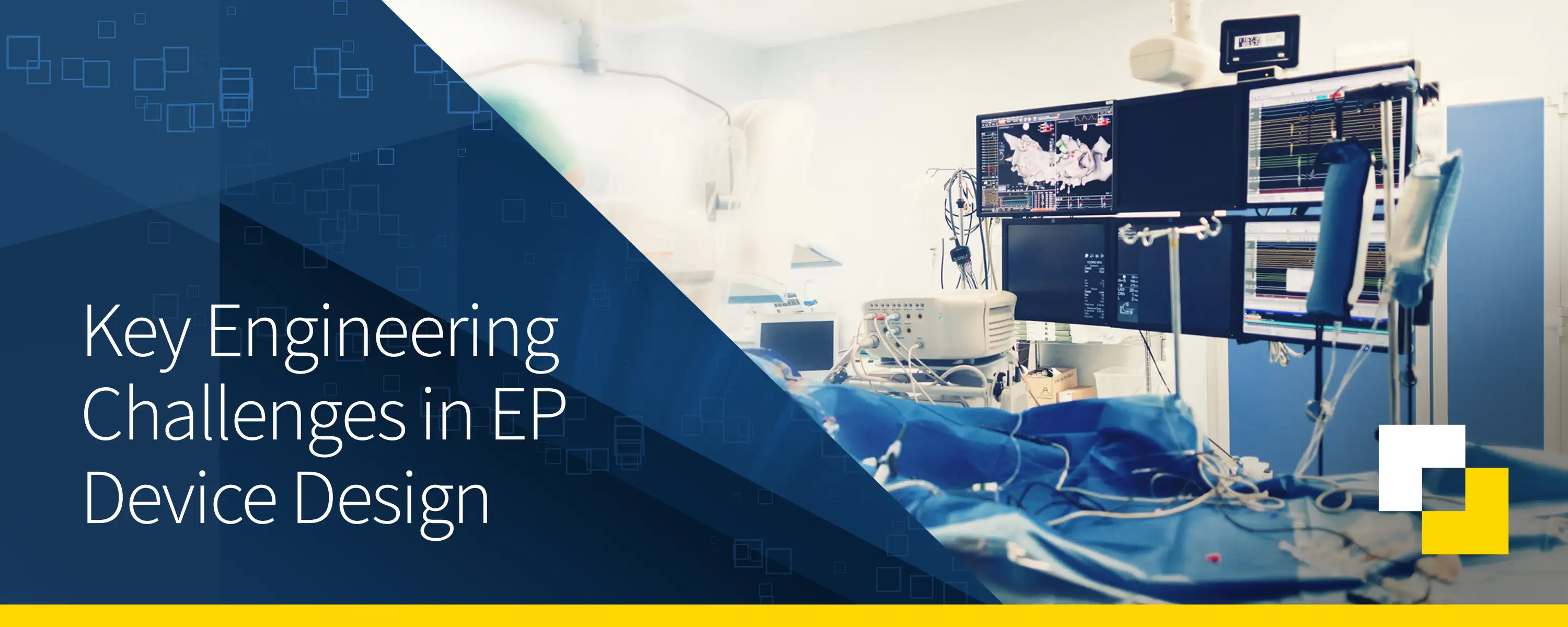
Key Engineering Challenges in EP Device Design
EP device development combines electrical, mechanical, material, and manufacturing requirements in a very small platform. A change that improves one area can create a tradeoff elsewhere. For example, adding more sensing points can improve mapping capability, but it may also increase connector density, routing complexity, and noise-control requirements.
1. Miniaturization and high-density connectivity
Electrophysiology is mostly about access to the heart or therapeutic area via a catheter access in the femoral vein in the leg which is a form of minimally invasive procedure. The push for more signals in mapping catheters means connectors must fit a large number of contacts in a compact space. Technologies like the DENSYTY® Interconnect System uses proven card edge technology to maximize contact density, performance and usability and have enabled significant wins by allowing high-density connections without increasing device size.
2. Signal integrity
EP systems work with low-level biological signals that can be affected by electrical noise, movement, and nearby electronics. Shielding, filtering, grounding, conductor placement, and connector performance must be considered together to protect signal quality.
3. Biocompatibility and material selection
Materials must be safe for long-term tissue contact. They must also support the required electrical, mechanical, and processing performance. Metals and polymers therefore need to meet strict regulatory standards for both biological suitability and functional behavior.
4. Regulatory compliance
Testing and documentation requirements influence architecture, material choices, verification plans, and supplier controls. Regulatory considerations are most effective when they are incorporated early in development rather than treated as a final checkpoint.
5. Design for manufacturability
A design must be repeatable for scalable production. Fine-wire termination, catheter assembly, high-density interconnects, inspection, and process control can all affect reliability. Manufacturing input during development helps reduce avoidable redesigns and transfer risks.
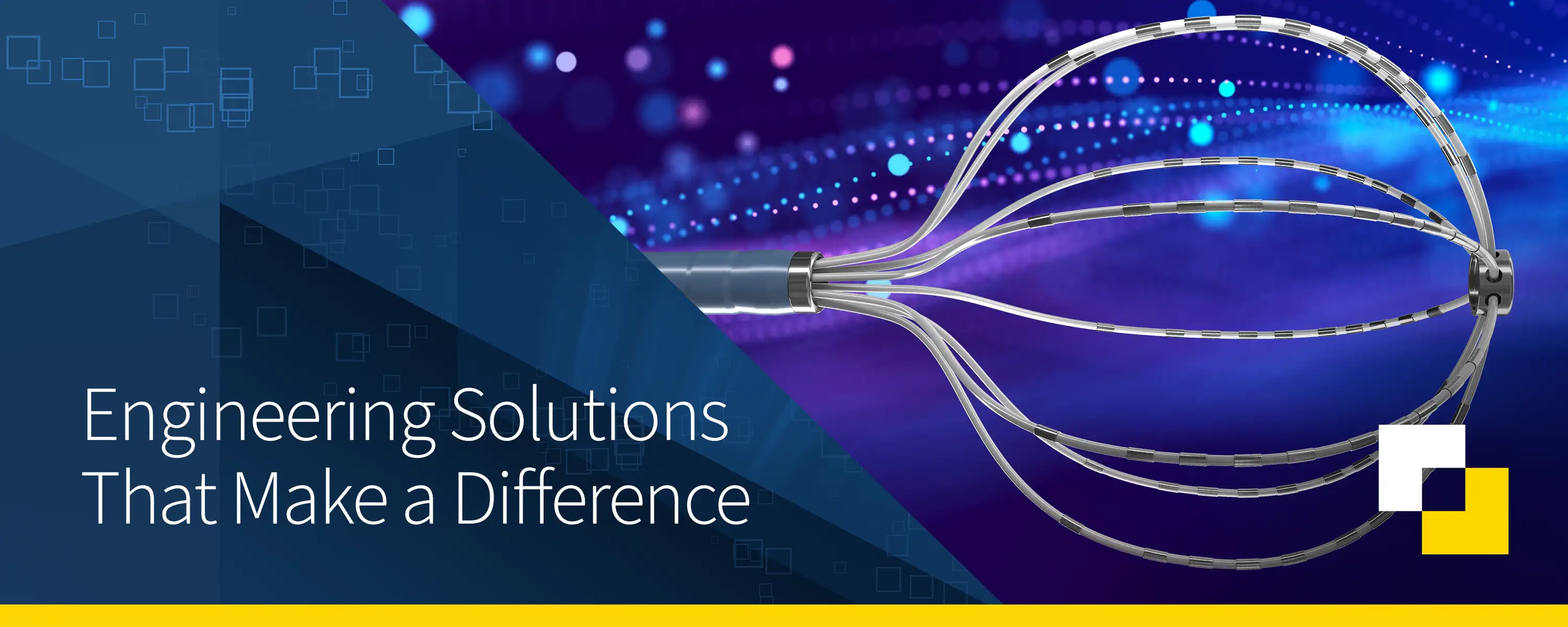
How Can Engineers Improve EP Device Performance?
Design the interconnect as part of the signal path
Evaluate contact density, connector size, mating reliability, shielding, cable routing, and usability as one system. High-density connector technologies can help support more channels within a constrained footprint. Also, accurate movement especially in catheter-based systems is vital for targeting specific tissues.
Protect weak signals from noise
Use a system-level signal-integrity strategy that considers shielding, filtering, grounding, conductor geometry, and the electrical behavior of every connection.
Select materials for the complete use case
Choose materials based on biological contact, mechanical requirements, conductivity, flexibility, corrosion resistance, processing needs, and sterilization compatibility. At AMETEK Paragon Medical all electrophysiology components are manufactured using industry-approved and standardized biomaterials, for example metals such as titanium, platinum-iridium, Nitinol, and stainless steel or polymers like silicone and PTFE.
Build manufacturability into the design
Involve manufacturing specialists before the design is frozen. Early reviews can uncover limitations related to assembly access, tolerances, joining methods, inspection, and process capability.
Work collaboratively across disciplines
Device engineers, manufacturing teams, suppliers, and clinical experts see different risks. Structured collaboration helps connect clinical needs with technical requirements and production realities.

Which Technologies Are Shaping the Next Generation of EP Devices?
Pulsed field ablation (PFA)
PFA is a game-changing technology for AFib treatment. Unlike traditional thermal ablation, PFA uses high-voltage electrical pulses to destroy problematic cells, offering enhanced safety and efficiency. The non-thermal nature reduces the risk of damaging critical structures like the esophagus or phrenic nerve.
We see the simplification of procedures or combination of diagnostic and therapeutic devices in single device as an evolving trend area with PFA catheters.” - Deron Singer, Director Engineering & Technology at Paragon Medical. "
Advanced mapping and higher channel counts
More sensing points can give clinicians a more detailed view of electrical activity. For engineers, this creates demand for compact, high-density interconnects and disciplined signal management without compromising catheter size or handling.
Leadless pacing
Leadless pacing technologies reduce reliance on traditional leads and pockets. Multi-device communication and coordination can introduce new requirements for miniaturization, power management, telemetry, materials, and long-term reliability.
One example is the Dual-Chamber Leadless Pacemaker. The FDA-approved Aveir DR system from Abbott is the world’s first dual-chamber leadless pacemaker, enabling wireless communication between devices in both heart chambers. This innovation expands leadless pacing to a broader patient population, reducing complications associated with traditional pacemakers
Improved signal interpretation
More advanced software and data analysis and well as AI integration can support faster interpretation of EP signals. The hardware still needs to provide consistent, high-quality data, which keeps electrode design, interconnect performance, noise control, and system verification central to device development.
Conclusion: Engineer the Device as a Complete System
Next-generation EP devices require more than smaller components or additional sensing channels. They require coordinated decisions across signal integrity, materials, mechanics, interconnects, manufacturability, testing, and clinical use. Teams that address these factors early can reduce development risk and create devices that are easier to verify, manufacture, and use consistently.
Paragon Medical is a leading provider of advanced technology products and systems for the medical device industry, with a strong focus on precision engineering. Most OEMs in the electrophysiology field utilize Paragon Medical's collaborative design and manufacturing capabilities to achieve a high-quality product, every time.
Frequently Asked Questions
What is an electrophysiology device?
An electrophysiology device is a medical technology used to detect, record, map, monitor, pace, or treat electrical activity in the body. In cardiac care, EP devices commonly support the diagnosis and treatment of abnormal heart rhythms.
How does miniaturization affect EP catheter design?
Miniaturization allows devices to access the heart through minimally invasive catheter procedures, but it reduces the space available for electrodes, conductors, insulation, steering features, and connectors. Designers must increase functional density without sacrificing performance or reliability.
What materials are commonly considered for EP components?
Material selection depends on intended use. Examples include titanium, platinum-iridium, Nitinol, stainless steel, silicone, and PTFE. Each material must be evaluated for biological contact, performance, processing, and device-specific requirements.
What is Pulsed Field Ablation (PFA)?
Pulsed field ablation is an ablation approach that uses electrical pulses to affect targeted cardiac tissue. Its energy-delivery method creates different design considerations from conventional thermal ablation systems.
How can an OEM choose an EP device manufacturing partner?
An OEM can evaluate experience in catheter and interconnect design, material processing, fine-wire termination, prototyping, testing, quality systems, scalability, and collaborative engineering. The partner should be able to connect design decisions with reliable production methods.