
Advancing Stent and Implant Manufacturing Through Precision Laser Processing
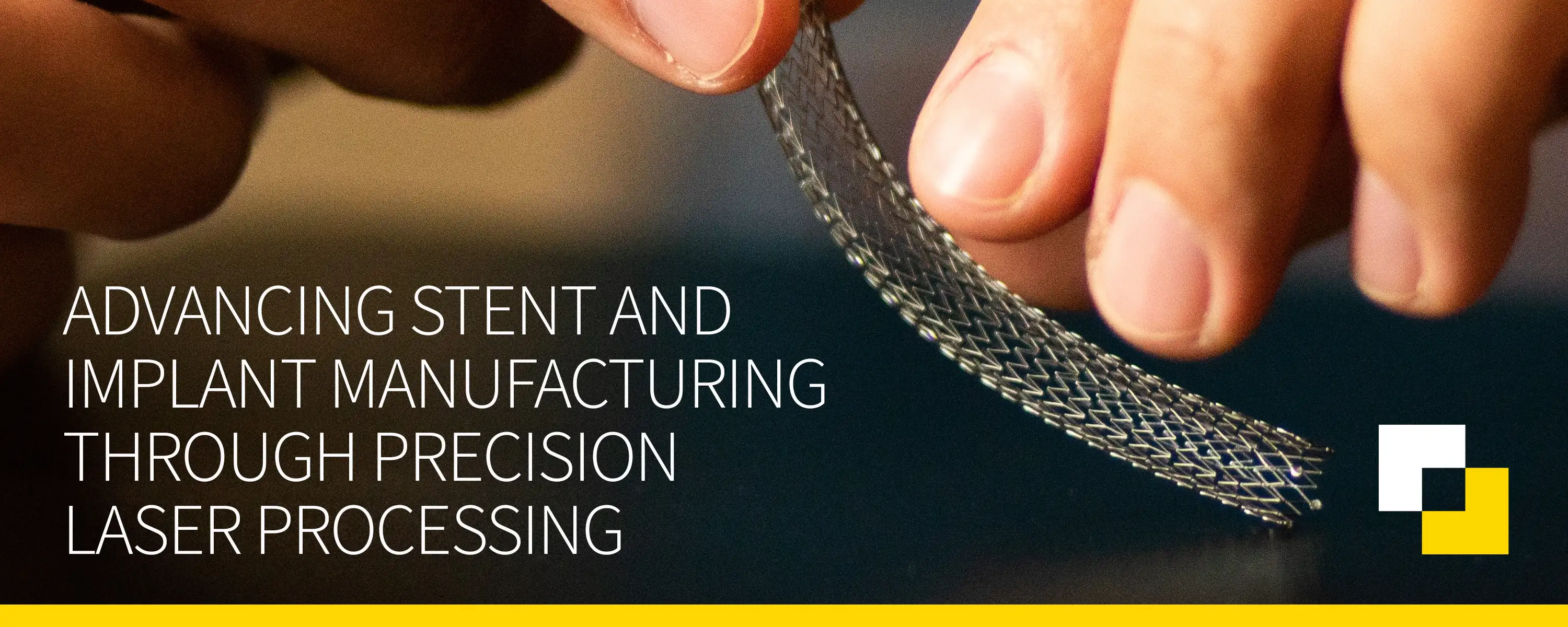
Medical device manufacturers continue to push the boundaries of innovation. Today's stents, implantable devices, and minimally invasive technologies require smaller components, more complex geometries, and increasingly stringent quality standards. As device designs evolve, manufacturing capabilities must evolve with them.
OEMs face growing pressure to achieve exceptional precision, repeatability, reliability, and regulatory compliance while accelerating product development and commercialization timelines. Traditional manufacturing methods often struggle to support the intricate features and tight tolerances that next-generation medical devices demand.
That's why precision laser processing has become a critical manufacturing capability. Advanced laser technologies enable manufacturers to produce sophisticated stent and implant components with the accuracy, consistency, and scalability required for modern medical device production.
What is Precision Laser Processing in Medical Devices?
Precision laser processing uses focused laser energy to remove, modify, or join materials with exceptional accuracy. Unlike conventional machining methods, laser processing operates as a non-contact manufacturing process, which minimizes mechanical stress on delicate components.
Medical device manufacturers use precision laser processing for a variety of applications, including:
- Laser cutting
- Laser drilling
- Laser welding
- Laser marking
- Laser micromachining
Among these capabilities, laser micromachining plays an increasingly important role in creating microscopic features and highly complex geometries. Manufacturers can achieve micron-level tolerances, exceptional repeatability, and consistent production quality across both prototype and commercial volumes.
As medical devices become smaller and more sophisticated, laser micromachining enables design possibilities that conventional manufacturing methods often cannot achieve.
How Nitinol Changes the Manufacturing Challenge
Nitinol has become one of the most important materials in modern medical device manufacturing. Its unique shape memory and superelastic properties make it ideal for self-expanding stents, structural heart devices, and a wide range of minimally invasive implants.
However, nitinol introduces significant manufacturing challenges.
The material responds sensitively to thermal input during processing. Excessive heat can alter the mechanical properties that make nitinol valuable in the first place. Manufacturers must carefully control every aspect of the process to preserve shape memory behavior and maintain superelastic performance.
Successful nitinol manufacturing requires more than advanced equipment. It requires deep material expertise, robust process validation, and a thorough understanding of how manufacturing variables affect device performance.
When processing nitinol devices, manufacturing expertise becomes just as important as manufacturing technology.
Ultrafast Laser Technology Enables Next-Level Precision
As implantable devices continue to shrink, manufacturers increasingly rely on ultrafast laser technology to achieve higher levels of precision.
Femtosecond laser systems generate ultra-short laser pulses that remove material with exceptional control. This process often functions as a form of "cold" ablation, which minimizes thermal impact on surrounding material.
The benefits include:
- Minimal heat-affected zones
- Reduced recast layers
- Improved edge quality
- Enhanced feature accuracy
- Less secondary processing
These advantages become especially important when working with nitinol and other material-sensitive alloys. Ultrafast laser technology helps preserve material integrity while supporting increasingly complex and miniaturized device designs.
Rather than forcing manufacturers to choose between precision and material preservation, ultrafast laser processing delivers both.
Designing a complex nitinol stent or implantable device? Contact Paragon Medical's engineering team to identify the optimal manufacturing strategy for performance, scalability, and regulatory success.
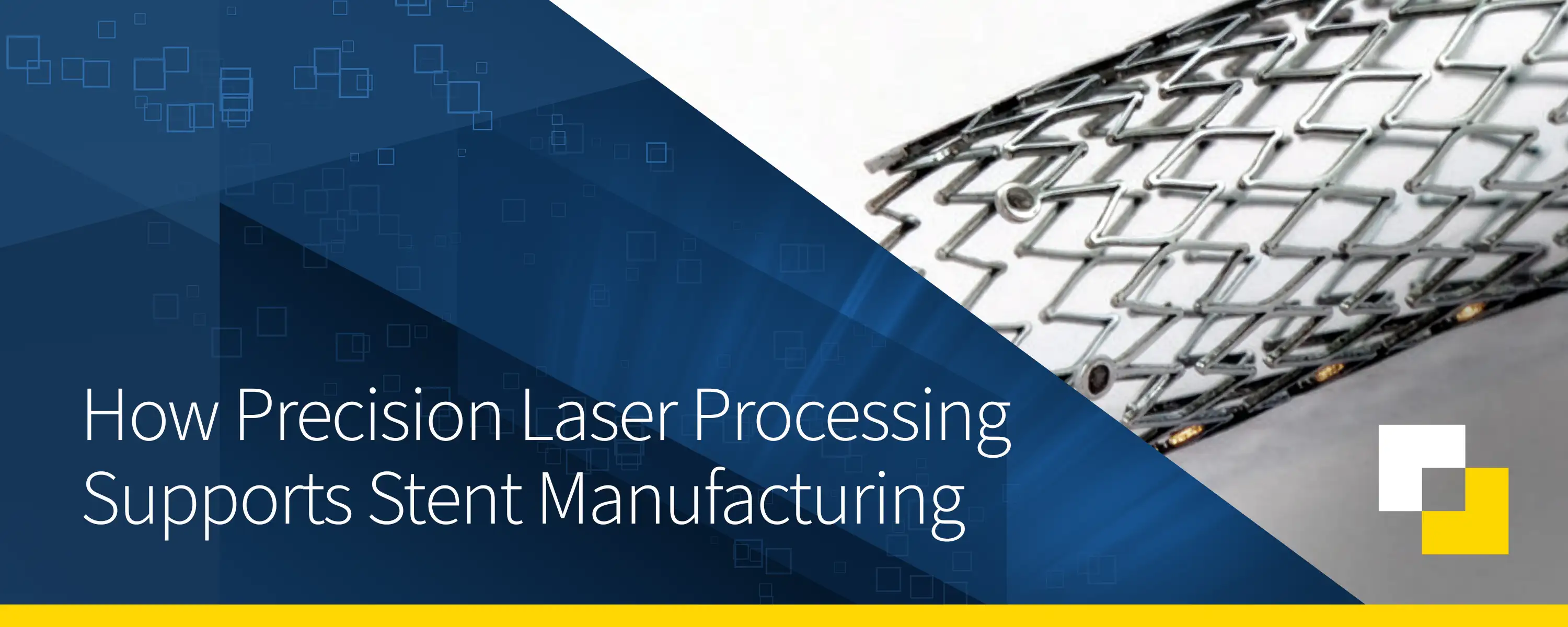
Stent manufacturing depends on the ability to create highly intricate lattice structures within extremely small device footprints.
Precision laser cutting serves as a foundational manufacturing process for creating these complex mesh geometries. Advanced laser systems support intricate design specifications while maintaining the tight tolerances required for device functionality.
Manufacturers can optimize critical design characteristics such as:
- Flexibility
- Radial strength
- Deliverability
- Structural consistency
Laser processing also enables exceptional feature control and repeatability. Consistent strut widths and precise geometric features help manufacturers maintain production quality across increasing volumes.
Beyond nitinol, laser processing supports a wide range of materials commonly used in cardiovascular device manufacturing, including stainless steel and cobalt chromium alloys. This versatility allows OEMs to select materials based on design requirements without sacrificing manufacturing precision.
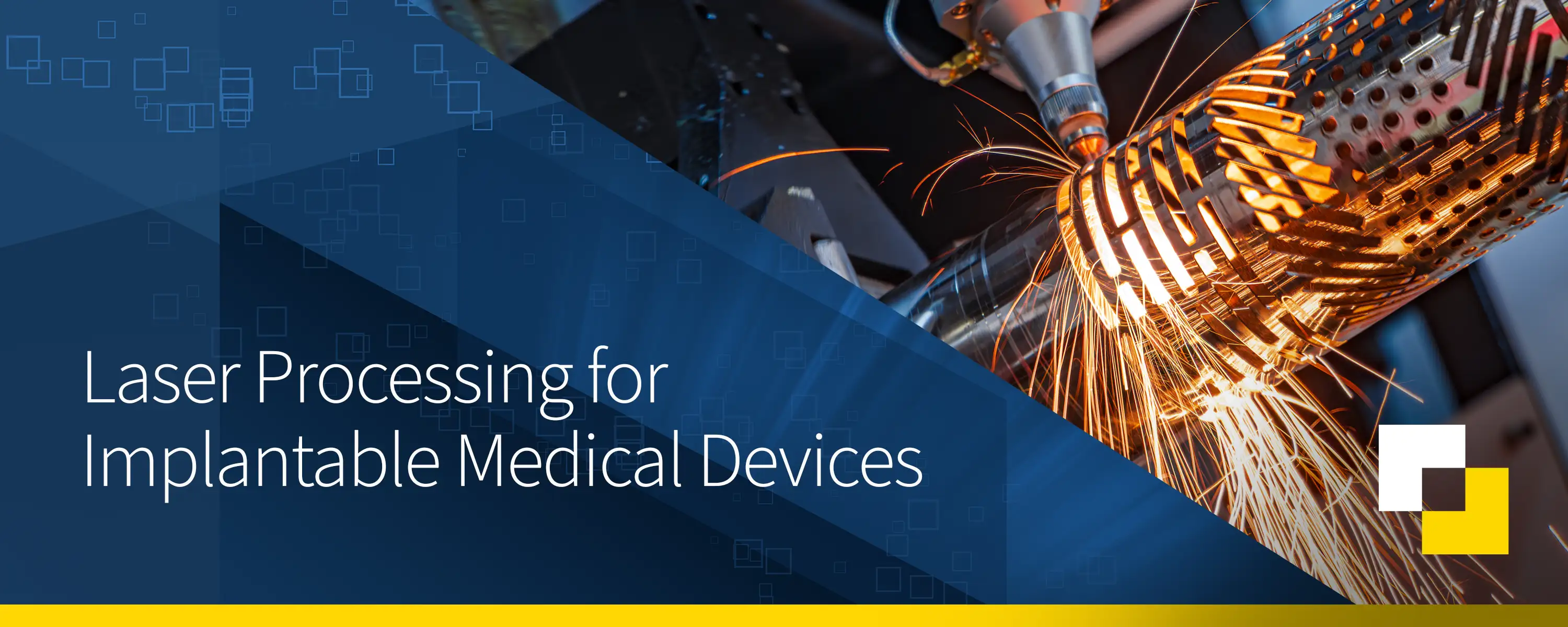
The benefits of laser micromachining extend far beyond stent manufacturing.
Manufacturers use advanced laser technologies across numerous implantable medical device applications.
Orthopedic devices often require precision-cut implant components with complex geometries. Neurovascular devices depend on micro-scale features and exceptionally tight tolerances. Structural heart technologies frequently incorporate intricate designs that require careful material handling and precision processing.
Urology devices, minimally invasive instruments, and other implantable technologies also rely on increasingly miniaturized components that demand advanced manufacturing capabilities.
As device complexity continues to increase, laser micromachining provides the precision necessary to support innovation across a broad range of medical specialties.
From Laser Cutting to Finished Implant Components
Precision laser cutting represents only one step in the manufacturing process.
A finished implant depends on multiple downstream operations that influence quality, performance, and regulatory readiness.
Manufacturers often perform annealing and thermal conditioning processes to prepare components for additional manufacturing steps. For nitinol devices, shape setting establishes the final geometry and activates the material's shape memory characteristics.
Additional finishing processes may include micro-abrasive blasting to refine surfaces and remove manufacturing artifacts. Electropolishing further enhances surface finish, improves corrosion resistance, supports cleanliness requirements, and contributes to long-term device durability.
Each process influences critical product characteristics, including fatigue resistance, corrosion performance, dimensional consistency, and overall product quality.
Successful implant manufacturing requires a comprehensive approach that integrates precision laser processing with downstream finishing, validation, and quality control activities.

At Paragon Medical, our teams combine advanced laser micromachining capabilities, deep nitinol expertise, and integrated manufacturing services to help medical device innovators move efficiently from concept to commercialization.
By bringing engineering, manufacturing, and process expertise together, we help OEMs develop high-performance stent and implant solutions designed for precision, scalability, and long-term manufacturing success.
Partner With Paragon Medical
Contact our team today to discuss your next stent or implantable device project and discover how our integrated manufacturing solutions can help accelerate development, support scalability, and achieve your quality and performance objectives.
Frequently Asked Questions
What is laser micromachining?
Laser micromachining is a precision manufacturing process that uses focused laser energy to create extremely small features, intricate geometries, and tight tolerances in medical device components.
Why is nitinol challenging to manufacture?
Nitinol requires careful process control because excessive heat can affect its shape memory and superelastic properties. Manufacturers must use specialized equipment and expertise to preserve the material's performance characteristics.
What are the benefits of laser processing for stent manufacturing?
Laser processing enables complex lattice geometries, precise feature control, exceptional repeatability, and consistent quality across production volumes, making it ideal for advanced stent manufacturing.